
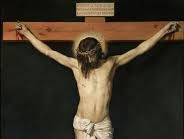
Good Friday

Isaiah 52:13-53:12, Psalm 31:2, 6, 12-13, 15-17, 25, Hebrews 4:14-16, 5:7-9, John 18:1-19:42

Good Friday recounts Jesus death on the cross. This happens because people killed him. It did not happen to pay off a God who had been tracking human offenses and needed repayment. It did happen because God had been trying to save humanity for centuries and people didn’t understand the true implications of the message from prophets, priests and history. Jesus dies because people’s hatred and fear destroyed the best efforts of the Son of God. Except, of course, people didn’t really destroy those efforts they only managed to kill the messenger, as we so often do.

What we are still trying to take to heart communally is that God wants to give us a life of beauty and peace. We generally find it hard to believe that offer is real. So some person, a real, in-the-flesh human being, had to demonstrate the peace and love of God’s presence so the rest of us could recognize what God’s peace, love and joy would look like. By doing that, Jesus literally changes history, changes the reality we live in by accomplishing what God has wanted since Adam looked across the garden. In Biblical terms, Jesus does what Adam failed to do. People now live in a world where God’s will has been done. At least once.

The problem is, it cost Jesus everything to do it. So it doesn’t look like a victory. Only Easter solves this problem. But that’s a discussion for another day. Today, he dies brutally because by remaining faithful to a life of love, mercy and generosity the political and religious powers of the time were threatened. Today too, radical Christian living threatens the status quo. People in power want to keep it. Privilege expects to keep privileges and doesn’t worry about those damaged in the process. This is the weight of human sin that fell on Jesus and everyone else who now knows there is divine value in living out of love. Jesus came to show us a God that literally lives with us and he was therefore subjected to all the tragic evil a defensive human race could muster.

It’s crucial that we get this right because otherwise we twist the message into a horror. God’s message is that God is with us, takes on our sins, our failures, our fears and hatred in order to give us a chance to live freely, generously and happily. This death of Jesus isn’t about God exercising justice because of humanity’s failures, it’s about God absorbing the consequences of human injustice. God will take and transform the worst we can dish out into a glorious tomorrow. (OK, that is Easter.) Jesus’ death is the demonstration that God means business, “I do what I say,” in this case, that God’s life lives with us.

This is not an easy message. Because Jesus does absorb everything the Romans could do to him. He died. That means being a Christian, one that is trying to live as Jesus did, can be a dangerous and costly life choice. Jesus death doesn’t fix the human condition. It only succeeds in establishing the possible. That’s why St. Paul warns “we are baptized into his death.” Living a Christian life should change us and it will cost us something. How much depends on what each of us can manage to risk, to love, to give of ourselves accepting that what happens may not look like success. The key is that we live out of love, giving as Jesus did, and therefore, establishing that no matter what life often looks like, God’s love, care and generosity do exist in this world.

Tuesday of Holy Week

Isaiah 49:1-6, Psalm 71:1-6, 15, 17, John 13:21-33, 36-38

We are in the midst of Holy Week. This week contains the events that are the core of our faith. Jesus goes to Jerusalem to announce the coming of God’s reign and the authorities are so challenged by him that they successfully organize his death on the cross. What looked like the end of Jesus turned out to be the beginning of God’s reign, where life triumphs over death.

However, the story of Holy Week is more than a retelling of an historical event. It is God trying to tell us something about what God wants. So let’s begin with the first reading which is part of the scriptural groundwork for the events of Holy Week. Today’s reading from Isaiah is the second of four descriptions of the servant of God. We hear Isaiah tell of the servant being called from the womb, from the very beginning of life. The servant being formed as a weapon of God and calling Israel back to God. It is about toiling in vain and yet with God as his strength being a light for the world. As Christians we have come to apply all this to Jesus as the ideal servant of God. That certainly is a valid understanding.

However, I want you to notice that this section is written in the first person with only the end being the voice of God. What I want you to consider is that the wording makes it easy to apply what is said to the reader, to each of us. The reading says, “The Lord called me.” We need to take that seriously, each one of us. We are the ones who God has honed into a sharp edged sword and protected so we could bring distant peoples back to God. We have been made glorious in the sight of the Lord and God is our strength. The scriptures always tell us what God wants for each of us. Jesus is the perfect example of what Isaiah is describing but it didn’t end with Jesus. If it had we wouldn’t be believers today. We are the people of far distant lands. From Jerusalem, Massachusetts is pretty much the end of the earth. Jesus was only the first of the servants of God, we need to continue what has been passed on to us. We need to hear Isaiah and John as a personal message directed at us.

So if we accept that Isaiah is calling us to be a light to the nations and continue to spread God’s salvation, what can we take from today’s Gospel? I think it offers a view of the challenge of following Jesus. Judas and Peter have both been with Jesus as part of his inner circle of Twelve closest supporters. Individuals Jesus called personally, just like God has called each us to believe in Jesus. Yet now when Jesus is in Jerusalem to confront the seat of Jewish faith and to call them to reform, Judas can’t go along. He decides to abandon Jesus. He chooses another path. Peter on the other hand when confronted with the challenge of an unknown journey says he is ready for anything, even death to support Jesus.

I think we face these kinds of decisions all the time in our lives. We’re not sitting in a room with Jesus as he eats with us but we come to be fed by him and believe he shows us the way to a better life. The question is, can we be faithful, will we stay the course as events present themselves in our lives. We probably aren’t going to turn our backs on Jesus as Judas did. But it may be hard to remember that grand enthusiastic acts aren’t the answer either. Everyday decisions at home and at work may say more about the kind of person we are. We know Peter denied Jesus three times the same night he promised to fight to the death for him. So we may not always follow through as we would like. Peter is a great example of the ability to accept forgiveness and stay the course. We need not give up because at times we fail. Rather we should take to heart what Isaiah says, “Though I thought I have toiled in vain, and for nothing, spent my strength … I am made glorious in the sight of the Lord and God is now my strength.” We need to consider that we were made from the beginning to be servants of God, precious in God’s sight, formed and called by God. Can we accept God’s call? Can we see ourselves as precious and will we say, “Yes, I’ll try.”