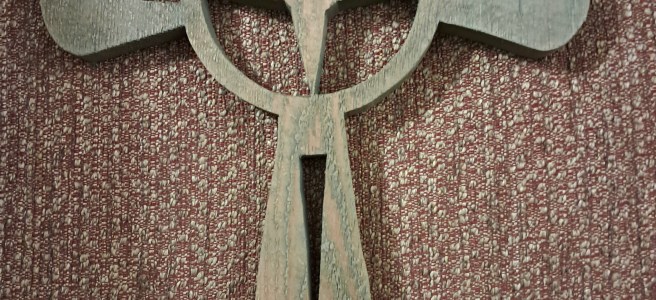
Memorial, St. Benedict

Scripture Readings for July 11, 2025

Genesis 46:1-7, 28-30, Psalm 37:3-4, 18-19, 27-28, 39-40, Matthew 10:16-23

After sitting with these readings this week what strikes me is the consistent care and concern that God has for his people no matter where they go or what they do. The Genesis story tells of the Israelites being uprooted to go far from home so they can survive the famine. In Matthew’s Gospel Jesus is sending his disciples to places unknown.

Yet in both stories God is going to be there. In Genesis Jacob hears God say explicitly not to be afraid to go to Egypt because God will be with him. There is even the promise to bring them back. What more can you tell someone who is going away to comfort and encourage them but that they will return home safely. In Matthew, Jesus doesn’t say being a disciple is going to be easy. Rather he warns his disciples that they are going out among wolves. But no matter what happens God will tell them what to say and when they “endure to the end” they will be saved.

I also don’t think this is pie in the sky stuff. It is not a Pollyanna view of the world where people are simply reassured that everything will be “all right.” Jesus says disciples must be wise as serpents, simple as doves. He knows families will be divided and suffer from the loss. He doesn’t suggest they take on futile causes, so if one town rejects them they are to move to the next. And we know that once the Israelites go to Egypt not everything is going to work out well the whole time they are there. But we know that God does keep God’s promise, the Israelites, led by Moses, do return from Egypt to prosper as a nation.

It suggests to me that just because God is close to us and part of our lives, that doesn’t remove the difficulties or challenges or decisions that life presents. But it does say that if we are open to it. God will comfort us and care for us in ways that will surprise us and free us. I think it suggests exactly what the Psalm says, “The LORD watches over the lives of the wholehearted; their inheritance lasts forever. They are not put to shame in an evil time; in days of famine they have plenty.” God will help us be our best selves.

 Whether we have plenty right now or if we are starving in some way, what we need to do is look for the God who took Jacob to Egypt and brought him home. The God who brought Joseph, the son believed to be dead, back to see his father, so they could cry on each other’s shoulder. The God who saw his own son slaughtered on a cross but who seeks to provide our every need. This God, the Psalmist says delivers the just from the wicked and saves them, because they take refuge in him. Are we taking our refuge in God? Are we giving God the chance to act in our lives? Are we asking for help when we need it? Do we let others in to be a part of what we need? Are we there when others have the courage to ask for the help they need? We heard what the Psalmist said this morning, “Do good that you may abide forever, for the Lord loves what is right and does not forsake his faithful ones.” God and us we’re in this life together.

Tuesday, Fourteenth Week of Ordinary Time

Scripture Readings for July 8, 2025

Genesis 32:23-33, Psalm 17:1b,2-3,7-8,15 and Matthew 9:32-38

Today’s world is complicated. That is a blessing and a curse. Our choices are many but we can’t have it all. I believe one popular phrase is, “Fear of missing out,” FOMO. How do we sort through the wonderfully varied choices and find what is best for us? Some things are good for us and some things aren’t. What’s more, the longer we live the more things change around us and within us as well. It’s not easy to understand, much less manage, the world and our feelings and desires.

I’m talking about this primarily because of Jesus’ observation in Matthew’s Gospel today, “And when he saw the crowds he felt sorry for them because they were harassed and dejected, like sheep without a shepherd.” I think we can understand harassed and dejected all too well. We may not know about sheep and shepherds but we understand the idea. We need some kind of guide or guiding principle to help us sort out what’s important from what’s not.

One of the things about the Bible is how concrete it is. The stories are very specific. Sometimes that can get in the way of understanding them because it’s all set in times long, long ago. However, the point of concrete, specific stories about what happens to people is that they are trying to tell us where to look for our answers. Where? In the absolutely specific, concrete events of our lives. What is happening for us? Are things getting better or worse? Are we happy or not?

The question about people being dejected comes right after Jesus has driven out a devil from a person who couldn’t speak and then could. Matthew says, “the people were amazed and said, ‘Nothing like this has ever been seen in Israel.’” I suggest we have to take seriously what we see happening around us and within us. This is a question of seeing. Are we looking or trying to avoid what we see? Can we be honest with ourselves about what we see? That is not always easy to do.

That’s the message in the Genesis story. Jacob has lots going on in his life: two wives, eleven children to get across the river and all his possessions as well. He’s not some person taking time out to go on a retreat to find himself. Stuff is happening right now. In the midst of that activity someone starts a wrestling match with him in the middle of the night. Jacob stays with it all night. He has no idea who he’s contending with. But come morning things have changed, his opponent has wounded him but the fight produces a new man. No longer Jacob, he’s now Israel. To have your name changed in Biblical stories is to be a different person.

Jacob in the dark of night, when he couldn’t see anything, didn’t know who was challenging him, was fighting through a time of uncertainty, unknowing and confusion. Jacob keeps going until dawn when he can see, recognize the challenges and amazingly ask for a blessing. Genesis says, he won’t let go until what is hurting him blesses him. He gets his new name, becomes a new person, because, “you have contended with divine and human beings
and have prevailed.”

It’s not easy to acknowledge what is keeping us down but fighting until we know where the good things are is what we need to do. We need to get through the night until dawn no matter how hard that is. Like Jacob, we may find it God was with us all along in ways we didn’t understand.

Today’s Psalm sums it up, “Though you test my heart, searching it in the night, … on waking, I shall be content in your presence.”

Tuesday, Thirteenth Week of Ordinary Time

Scripture Reading for July 1, 2025

Genesis 19: 15-29, Psalm 26: 2-3, 9-12, Matthew 8: 23-27

Maybe it’s obvious, but for me the key to today’s two readings is the parallel between saving Lot and saving the disciples in the storm. In both cases we have people of “little faith.” Lot is reluctant to leave Sodom. God’s messengers literally have to drag him and his family outside the city and still he doesn’t think he can make the hills but needs to go to a small town that closer. The Apostles are totally unnerved by the storm at sea and need to wake Jesus because they are “perishing.” Both the Apostles and Lot’s family are saved not because of their own actions but because of their relationship with someone else who is a “friend of God.”  Lot is Abram’s nephew and the disciples are, of course, Jesus’ disciples.

It seems to me that the message is pretty simple. If you are in real trouble, “we are perishing,” the right move is to reach out to God for help. So regardless of what you may think about the historical facts of miracles in the Bible, the story is saying the God has the power to change what seems like hopeless situations. Nothing is inevitable. Life can be different than the way it looks at the moment. That’s what happens for Lot in Sodom and the frightened disciples at sea.

I would argue that it isn’t even about having a great confident faith in God’s presence. This story suggests that even if you’re unsure, reluctant and even resistent God can bail you out if you just follow instructions. Lot hesitates to leave, then argues with his divine savior about where he’s going and still ends up safe before literally fire and brimstone rain down on everyone who stayed behind. Sometimes you have to wonder what it takes to see the right path. I think that’s the point. Seeing the right path isn’t easy but there is help if we’re open to it.

So, to the emphasize the point, the same is true for the disciples in the boat with Jesus. They think it’s the end and Jesus has to calm both wind and waves before they feel safe. If you ask if it really happened, it’s the wrong question. Again, it’s what the story is saying about God’s relationship to all of us. We’re all in the same “boat” and God’s presence is with us. We just have to ask for help even when we are of little faith. The idea is God is the one with the power to transform, we aren’t expected to have all the answers. But recognizing our own uncertainty is probably part of the solution. Then we may be able to express what we hear in today’s psalm, “O Lord, your mercy is before my eyes.”

Wednesday, Twelfth Week of Ordinary Time

Scripture Readings for June 25, 2025

Genesis 15:1-12,17-18, Psalm 105: 1-4, 6-9, Matthew 7:15-20

It seems to me that today’s readings are about having faith.

In Genesis we hear one of the foundation stories for Judaism and Christianity. God making promises to Abram. It is worth noting that God acts first by promising to protect Abram and only once God speaks does Abram raise the legitimate question about whether God’s protection will end up meaning anything because Abram doesn’t have any children to be heirs of God’s goodness.

Before I raise a question about this, notice that next God promises to give Abram a lot of land that belongs to someone else. Abrams responds by asking “how will I know that I will possess it?”

Here we have God offering Abram his protection and land for his use and Abram first reaction is to question its value and then whether he can trust God or not. Doesn’t that seem pretty bold to you?

I would like to suggest that’s not unlike today. You can’t always tell when God is tapping you on the shoulder. That is exactly what Jesus is talking about in today’s Gospel. Maybe it’s not God, maybe it’s a wolf in sheep’s clothing.

I write this blog because I am a confident believer in Christianity. I think Jesus was God’s son, that the God Jesus shows us is for real and that living based on the Gospels is the right thing to do. But I have met people, some friends and other acquaintances, bright people, honest, sometimes amazingly open and loving people who aren’t sure of anything about the outcome of this life. They believe all sorts of non-Christian, unorganized, speculative things about how life works. I’m not talking about people who have faith in other religions. I mean people who are unsure of any religion or randomly combine ideas from here and there and in the end aren’t sure what they have. My point. It is still pretty tough to tell if God is talking to you. Jesus’ comments don’t just apply to people in sheep’s clothing but also situations in life. How do we read them. Are they telling us something good or bad? I don’t think it’s easy even if you do believe in God to know how to respond in some situations.

So that reality makes Jesus advice helpful. Does the person or situation you encounter bring about good things for life or bad things? What kind of fruit comes from this tree, this set of circumstances, this person and who they are? That might seem like too easy an answer. But I don’t think it is, because in order to determine the nature of the person or situation you have to be able to judge what is good and what is bad. Making that judgment can be difficult for a number of reasons but I would like to focus on one. You can’t make a judgment about good or bad if you haven’t settled on some way of life, some standard. If you haven’t already said you believe in something. If a person just keeps flittering around different ideas, concepts or people with different opinions, that person will never be able to decide what is good and what is bad for them. You have to accept something for yourself, without that, you are lost.

This happens in our reading today when after the Lord promises Abram that he will have descendants like stars in the sky, Genesis says, Abram “puts his faith in the Lord.” Abram decides he will trust God in that moment and God accepts his trust as an act that defines something about Abram. Abram has taken a stand. It doesn’t end here. Even with this trust in God, determining what is from God takes real effort. Notice that when Abram is told to offer a sacrifice of animals he has to stay with the carcasses when birds of prey threaten and finally goes through a terrifying darkness before he hears God promise him and his descendants they will inherit the land.

All this is to say that paying attention to what life is telling us is not easy. It demands attention and perseverance in tough times. But most all, before anything else, making good judgments about God’s presence and what God offers us in this life demands faith. Real trust in the very God who wants to protect us.

Solemnity of John the Baptist’s Birth

Scripture Readings for June 24, 2025

Isaiah 49:1-6, Psalm 139: 1-3, 13-15, Acts 13:22-26, Luke 1:57-66, 80

Today, if you aren’t already aware, is the Solemnity of St. John the Baptist. The feast is made a Solemnity in order to give greater emphasis to the importance of John the Baptist.

The importance of John the Baptist is an interesting contradiction. In the course of the history of salvation he could be considered an “also ran.” Jesus is the key figure. He is the one who changes everything and his followers, the 12 Apostles, the Evangelists, Mary, and all the other disciples carry the story forward. John the Baptist is the last of what was left behind. He was a prophet calling out for the Messiah, he too was looking for someone.

So what makes the Baptist so important? We know that as the Gospel story develops he will be the one to Baptize Jesus. He will be the one to point him out to others. It is entirely likely that it is his words, his challenge that were key to the spiritual transformation of Jesus. But that is not the topic of today’s readings. Today we hear about his birth and his naming. He is called John instead of a name from his family heritage. It was a very unusual thing to do. But that unusual naming said something. John in Hebrew means, “the Lord has shown favor.” Isn’t that exactly what Elizabeth was expressing, having given birth to a first born in her old age? Isn’t it exactly what the Angel told Zachariah he was to name his son? Didn’t we all feel exactly that way when we saw our first child born. What else could a new child represent but the favor, the blessing of God.

But the truth is we don’t know. We never know when a child is born what will happen over the years. That’s exactly what everybody was thinking about this child named John, “What then will this child be?” Wouldn’t we all like to know what life will bring for our children, for ourselves? What’s more, it doesn’t get any easier as life goes along. No matter how favored we are by God, no matter how loved, sometimes we wonder if what we are doing is worthwhile. That’s what Isaiah is naming in the first reading, …God has called us since birth, protected us and given us the task of demonstrating His love of us all. Yet to quote Isaiah, “I thought I had toiled in vain, and for nothing, uselessly, spent my strength.”

John the Baptist is the poster child for doing what you think is right but not being “the one.” I think John represents all of us who can’t be sure if what we are doing is making a difference but we do it anyway. Luke in the Acts of the Apostles records the stance John the Baptist took, “What do you suppose that I am? I am not he. Behold, one is coming after me; I am not worthy to unfasten the sandals of his feet.” There it is. I have my part to play, but I’m not the big cheese and don’t expect me to be.

That’s why I think John the Baptist can be a model for us and our lives. Each of us has a role to play, we each point to Jesus in our own way. By living a faith filled life we make a statement about the value of faith in Jesus. But it’s not always easy for us to see how very important that role is. At times we can be discouraged and uncertain. Unlike John the Baptist, we’re not going to be able to unfasten the sandals on Jesus’ feet. Perhaps on this Solemnity that celebrates the unique importance of John the Baptist, what we should remember is the meaning of John’s name, the Lord has shown favor. We know that’s what God is about, grace and blessings. Like John, it is our job to pass it on by how we live. Whether we can always see the value of what we do or not, we are part of spreading God’s salvation to the ends of the earth.

Tuesday, Fourth Week of Easter

Scripture Readings for May 13, 2025

Acts 11:19-26, Ps 87:1-7, John 10:22-30

Christ is Risen, Truly Risen, Alleluia

We continue to celebrate Jesus’ Resurrection from the dead. We have been hearing in Acts about the early days of the Church and how it spread beyond Jerusalem. Today’s reading marks a significant turn of events because belief in Jesus moves beyond the Jewish community and he is accepted by Greeks as well. In other words, people significantly different from the original believing Jews recognized Jesus in their lives.

Let’s remember that for many people who met Jesus personally they didn’t accept who he was. Jews who had a great tradition of being rescued by God, who were awaiting a Messiah, didn’t recognize Jesus as the promised Messiah. Jesus was doing all sorts of good things but his actions challenged some and confused others. We now know that his works were sometimes interpreted as the actions of demons or a prelude to political takeover. His death on the cross seemed to end the issue.

In today’s Gospel, we have religiously devoted people who simply don’t recognize Jesus regardless of what he is doing and they want some kind of blunt statement, some proof of who he is. Yet in the reading from the Acts of the Apostles, Jews who believed in Jesus and fled Jerusalem because of the persecutions find people in other countries, who never met Jesus, who had no tradition of a coming Messiah and yet they can accept the story of Jesus, the Risen One, and believe he is the Son of God.

I think that is really hopeful for us. Because we are in the same situation. We are never going to meet Jesus the person who lived in Nazareth and traveled the Judean countryside. Yet we also know that throughout history people have come to recognize Jesus, the Risen One, in their lives and to believe in him.

I want us to recognize that faith means different things for different people. In fact, faith often means different things for each us over the course of our lives. Our faith changes as we grow older, it changes when we are confronted with different situations in our lives. So I want to raise a question for each of us. What does our faith look like? Is our faith only about keeping all the rules? Is our faith just about saying our prayers, coming to a Mass or attending a religious service? Is our faith limited to what we have been told is God’s will? Is our faith more personal? I want to suggest that today’s readings are about a more personal faith that recognizes Jesus, the Risen One, as someone active in our lives.

I am reacting to the part of John’s Gospel today in which Jesus says, “My sheep hear my voice, I know them and they know me.”  That is a statement of personal recognition, up close personal knowing. This is when you know a person because of a relationship that has revealed all sorts of little things, opinions, fears and desires about the other person to you and you to the other person. The Greeks in Antioch discovered this relationship with the Risen Jesus and so have other Christians for centuries.

What I want to suggest is that we can still hear and experience Jesus, the Risen One and recognize him. It may be in situations in our life, it may be in conversation with others, it may be in prayer or devotion, it may be in moments that take us out of ourselves, it may be by being totally wrapped up in an experience, but we should know that belief in Jesus can be very concrete, personal and involving. Just as Greeks came to know Jesus, the Risen One, from Jews who ran away from Jerusalem, we can come closer to Jesus when we talk about our faith with each other. Let’s be open to what happens each day and be willing to share those experiences with faithful friends. Maybe all the amazing things that happened in the early days of the Church happened simply because people were willing to share their experiences of God with each other.  Remember Christ is Risen, Truly Risen, Alleluia!

Thursday, Second Week of Easter

Scripture Readings for May 1, 2025

 Acts 5:27-33, Ps 34:2, 9, 17-18, 19-20, John 3:31-36

There are several things going on in the readings today. So I think it’s important to focus in on one. The Psalm says, “the Lord is close to the brokenhearted; those who are crushed in spirit he saves.” If we hear nothing else today, that is worth taking deeply into ourselves and savoring.

Too often our lives are cluttered with activities, obligations … and things we really want to do. Here is a gift of peace that could change us when we are frightened and brighten our days when the pressure of those schedules and other’s demands overwhelm us. “Those who are crushed in spirit he saves.”

This, to me, is the heart of prayer. No doubt at some point you have read or heard about a study that is run by some scientist who is trying to find out if prayer is effective. They are trying to measure one person’s or a group’s prayer to see if it changes some outcome for someone else. The results are often inconclusive, because it is the wrong question. Prayer is an expression of our relationship with God and no doubt there are changes but they are in us. We who were sad or frightened or heartbroken have been changed. That is the reality of prayer. It is as John’s Gospel says, “He does not ration the gift of his Spirit.”

So we can be confident that no matter how disheartened or frightened we may feel, God’s Spirit can lift us out of it if we are open to it. We need to believe in God’s presence right here, right now. That’s what believing in Jesus means. God is available to us in the midst of today’s life, in the current moment and whatever is happening for us.

We also have to recognize that this uncertainty, not being sure what Jesus can do, is not new. In the reading from John, the testimony of John the Baptist is saying, Jesus, the one from heaven, tells people what he has seen and heard but “no one accepts his testimony.” Lots of people didn’t believe it when Jesus was standing right in front of them.

Now, thousands of years later with the advantage of Church history, generations of saints and our own life of faith, it can still be difficult to accept that God is here for us and will give us what we need to overcome hard times. Today’s Psalm is really quite explicit, “many are the troubles of the just man, but out of them all, the Lord delivers him.” It doesn’t say many are the troubles of bad people, but many are the troubles of the just, and I would add, holy people. There really isn’t any question that bad things happen to good people. The only question is, will we believe, especially when we are “brokenhearted and crushed in spirit” that God can make a difference?

Well … Jesus is Risen, He is truly risen. Alleluia!

That should be our answer.

Wednesday, Second Week of Easter

Scripture Readings for April 30, 2025

Acts 5:17-26, Ps 34:2-9, John 3:16-21

Today’s readings are all about escaping the fear and judgments that keep us from being ourselves, good and holy people.

We begin with Luke’s story in the Acts of the Apostles that tells of the Apostles being put in prison because the authorities were jealous of all the good things they were doing. That same night an Angel comes, let’s them out and tells them to go to the Temple and preach about the good life that Jesus has brought.

Our Psalm acts as a perfect summary and interpreter of God’s action in similar situations in life. The response is simply, “The Lord hears the cry of the poor.” Followed by “I sought the LORD, and he answered me and delivered me from all my fears.” No wonder the psalmist blesses and glorifies the Lord throughout these verses. Our fears and the judgments of some people can be a jail that imprisons us. Only a sense that we are loved and not judged can set us free.

Love and empowering non-judgment are exactly what Jesus is explaining to Nicodemus in John’s Gospel. You may well have heard this line quoted in television ads for various Christian groups. It is the core of the Christian message: “God did not send his Son into the world to condemn the world, but that the world might be saved through him.” This is almost a repeat of the verse that precedes it, “God so loved the world that he gave his only-begotten Son, so that everyone who believes in him might not perish but might have eternal life.” This is followed by a pretty simple statement of how people can choose Jesus and light or evil and darkness. This statement about believing in Jesus or not, seems to be at odds with the prior verse that says the Son didn’t come to condemn the world.

 Yet the Psalm says, “Look to him that you may be radiant with joy, and your faces may not blush with shame. When the poor one called out, the LORD heard, and from all his distress he saved him.” Also when the temple guards go to get the Apostles out of prison to face the judgment of the Sanhedrin, the Apostles are gone. They are gone even though the doors are still locked and prison guards still on duty. There’s no logical way they could have gotten out. However, they did.

 I don’t want to dismiss this as an obvious miracle that God performed a long time ago. I believe this incident is meant to send us a message now. No matter the prison we’re in, not matter whether we’ve chosen the light or the dark at this point. Situations and attitudes can change with no logical explanation. Sometimes there is no logical explanation for what God does. Why? Because I’m not sure God looks at the light and dark of this world the way we often do. I think God simply loves us and acts out of that love.

Tuesday, Second Week of Easter

Scripture Readings for April 29, 2025

Acts 4:32-37, Psalm 93:1-2, 5, John 3:7-15

Happy Easter. Jesus is risen. He is truly risen!

So as you know, it is the Easter season. We are celebrating this amazing event that no one really understands. Jesus died and yet we believe he rose from the dead and lives with us still today. We may have become so used to the idea in our religious selves that we have forgotten how absolutely outrageous that claim can sound. Someone died and yet is alive in a real way 2,000 years later.

Perhaps we are like Nicodemus trying to understand what Jesus is trying to do with us. For me that is why I have always been drawn to the part of this reading that talks about the wind and how we don’t know where it comes from or where it goes. I think that is also true of how our lives work. Don’t we think, at times, how did I get here? In the same way, don’t we often wonder, what’s next? These common experiences expose a real vulnerability and hopefully humility that is part of human life. Too often we try to cover that vulnerability with behavior meant to hide it, or deny it or worse avoid it.

We need to accept our inability to control or comprehend every facet of our life so we can accept the loving care of God and follow where God leads. Wherever that might be. So Jesus is telling Nicodemus, and us, to look to God. To look up like the Israelites did in the desert. Looking up at the serpent in order to be healed. Facing, in other words, those things that frighten us. We can only overcome what we are willing to look at and tackle head on. In our case, it is Jesus on the cross who is lifted up. So we can see that giving ourselves totally to the challenges in our lives is the way to go. Giving ourselves totally to the people in our lives is the answer. That inherently means that we are not alone. Like the ideal description in the Acts of the Apostles we too can contribute to the good of the whole community but then also receive what we need from others. Which, of course, brings us back to where we started. In order to receive the gifts, the care and love from others we have to admit we need it. We have to admit that like Nicodemus we aren’t entirely sure of everything. We aren’t in total control of what happens in our lives. We need the help of others, we need the help of God to find our way, and only then will we be born again.

Monday, Second Week of Easter

Scripture Readings for April 28, 2025

Acts 4: 23-31, Psalm 2:1-4, 7-9, John 3:1-8

Today let’s talk about the Holy Spirit. We live in the time of the Spirit. Easter represents that change from Jesus, a person of history, to Jesus, our Savior. Easter is the basis of our faith. Jesus, a living human being died and rose to new life. Since that happened, each generation, beginning with the disciples has had to figure out what Easter means for them.  Jesus is no longer physically with us but amazingly he is still present.  As Jesus promised we were not left alone. The Holy Spirit, Jesus’ Spirit if you will, is part of our lives in a way so intimate and personal that I suspect many of us don’t always recognize the Spirit’s presence with us. That is what our readings are about today: the amazing presence and life giving support of the Holy Spirit.

The first reading presents exactly what we need to know. Peter and John had been threatened by the Pharisees. So the first thing they did was go to the community and the first thing the community did was pray for the Spirit to strengthen them to do what needed to be done. What may not be obvious in this sequence is that the Holy Spirit was part of their understanding before they made that first move. Jesus says it best in the Gospel, “Amen, amen, I say to you, unless one is born from above, he cannot see the Kingdom of God.” Peter and John and the community of faithful wouldn’t have known what to do unless they had already been “born from above.”  We might say they had been converted, or had faith, they already believed in the power of God to be part of what was happening around them.

In the Gospel, Jesus is trying to get Nicodemus to look at life so he can see how much more is at hand. He is saying there is something more to this life than the physical world taken at face value. There is more to everything.

Unless we move beyond the immediate physical world and all its limitations we won’t see the Kingdom of God either. I don’t mean going to heaven after we’ve died. I mean the Kingdom that can be created right here, right now. That Kingdom, that reality is only accessible through the Spirit, God’s Spirit, Jesus’ Spirit.

I think Jesus is talking about the possibility of overcoming life’s limitations, the things that threaten us. We all know and can think of examples: how about overcoming the fear that keeps us from taking on something new, overcoming hatred that separates people, overcoming ego that makes us righteous, overcoming ambition that keeps us from being generous? Wouldn’t that be a birth to new life? That way of living is beyond the physical it is the realm of the spirit. There is more to life than the physical but we have to be open to it. Jesus again, put it this way, “Amen, amen, I say to you, unless one is born of water and Spirit he cannot enter the Kingdom of God.” We have to be willing to see the possibility, to have faith that the Holy Spirit can be a real factor in our lives.

Acts tries to tell us how real and concrete the action of the Spirit can be. It says, “As they prayed, the place where they were gathered shook” And the result of their prayer? “They were filled with the Holy Spirit and began to proclaim the word of God fearlessly.” It says, fearlessly … wouldn’t we love to be without fear?  This is the Easter season, death has been vanquished, new life is everywhere. We should ask ourselves if Easter is going to have any effect on us? Perhaps, it is time for us to acknowledge our own need to be shaken up?